Algarve-Tourist.com
The best independent guide to the Algarve
Algarve-Tourist.com
The best independent guide to the Algarve
Silves, Portugal: an independent travel guide for 2026
Follow the Arade river inland from the coast and it will lead you, as it led Phoenician traders and Moorish settlers and Crusader armies before you, to Silves. For centuries this river was the reason the town mattered, connecting the Algarve's interior to the sea and turning a hilltop fortress into one of the most prized cities on the Iberian Peninsula.
Under Moorish rule (8th to 13th century), Silves was the region's political and cultural centre, a city whose wealth and sophistication rivalled Granada and Seville. Today, this peaceful riverside town preserves its past through one of Portugal's most impressive castles and a historic centre that remains untouched by mass tourism.
Below the castle, the old town is a meander of cobbled streets and whitewashed houses that sit alongside the redbrick town walls. Here, life moves at a traditional pace, locals gather in small cafés, old men settle into the shaded squares, and family-run tascas serve lunches that run late into the afternoon. Nobody here is in a rush, and after an hour or two, neither are you.
I have lived in and explored the Algarve since 2001, and together with my Portuguese wife, have come to know the Silves region deeply. It is a town we return to often, not only for itself but as a base for exploring the beautiful and often overlooked rural heart of the Algarve. This guide draws on our two decades of firsthand experience and local knowledge to help you plan your perfect trip here.
Highlights of Silves

The Castelo de Silves: The largest and best preserved Moorish fortification in the Algarve, its red sandstone walls and eleven towers crowning the hilltop that has been fortified since Roman times. Inside, you can walk the ramparts, explore the excavated remains of the old Moorish settlement, and visit the enormous underground cistern that was supplying water until the 1930s.
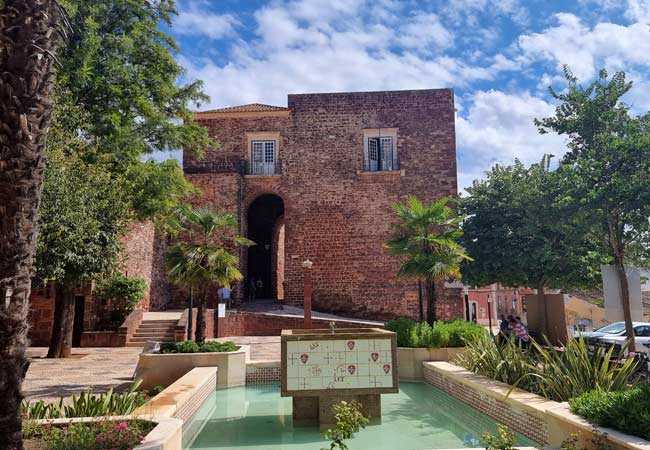
The Portas da Cidade: The only surviving gateway into the medieval walled city. Built from the same red sandstone as the castle, its tall narrow entrance and sharp right-angled turn were designed to make a direct assault on the city impossible.
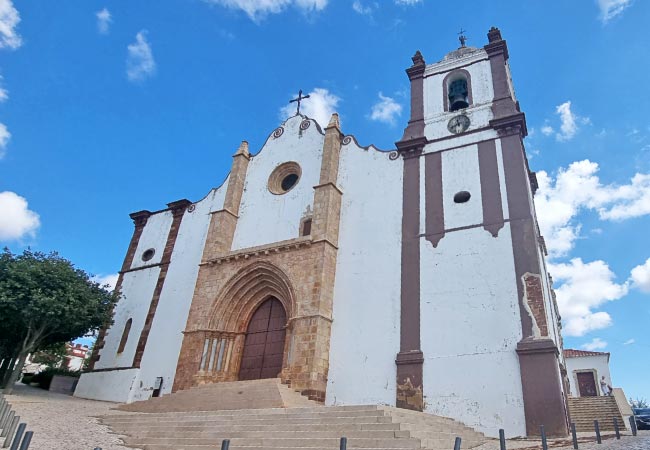
The Sé Cathedral: The Algarve's most important Gothic building, raised on the site of the city's former Great Mosque after the Christian reconquest of 1249. The interior is a blend of styles, from Gothic vaulting and medieval tombs to Baroque additions made after the devastating 1755 earthquake.
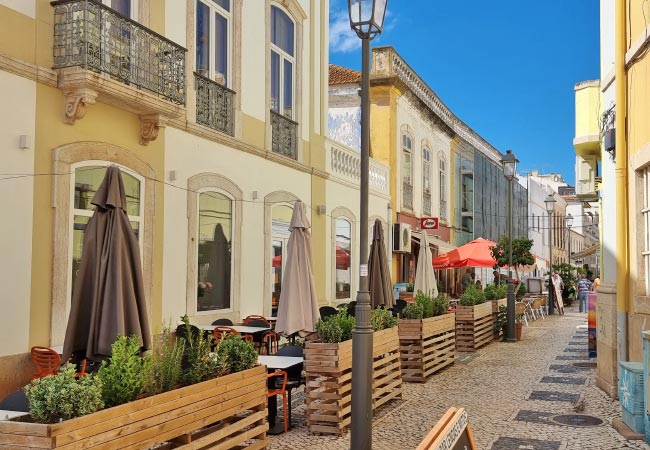
The Portuguese ambience: Silves has not been reshaped by tourism the way the coastal towns have. The cafés here serve locals, the restaurants are family-run, and the pace of daily life still follows the heat rather than the tourist season. For many visitors to the Algarve, this will be the most authentically Portuguese place they see.
Related guide: Sights of Silves
My View of Silves
I'll be honest: I have a real soft spot for Silves. After spending time on the tourist-focused Algarve coast, Silves always feels like a return to something more Portuguese.
For me, a visit here usually goes the same way: browsing the daily market, finding a café on the Rua Elias Garcia for a coffee and a pastry, and then building the resolve to climb the steep hill to the castle.
The castle is, if I'm being truthful, the only major tourist attraction in Silves. But it is a genuinely impressive one and among the best in Portugal. Between the ramparts, the excavations and the vast underground cistern, it comfortably fills an hour. After exploring the castle in the heat and intense sun, I usually head to Café Inglês with its shaded terrace for a cooling drink.
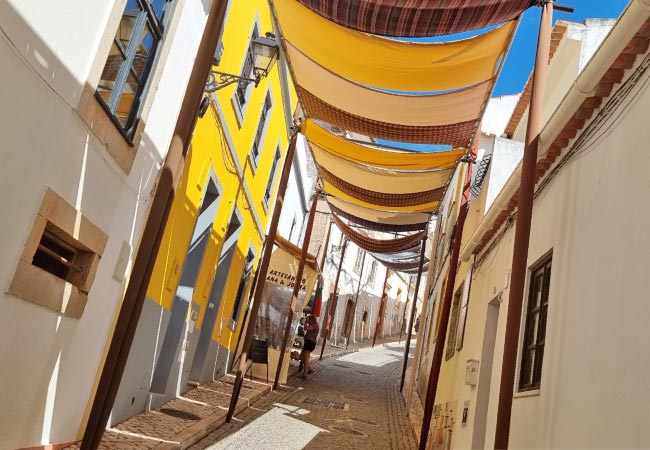
The Rua da Sé, the steep uphill street from the Portas da Cidade to the cathedral.
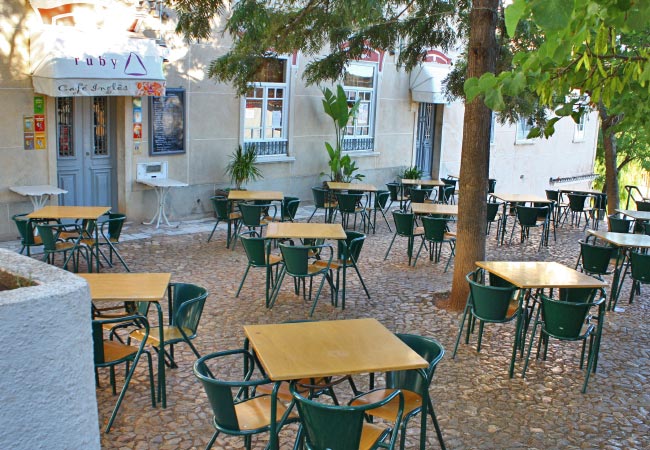
The Café Inglês is a great stop after exploring the castle.
For your day trip, it is worth being realistic about the size of Silves; it is only a small town. My typical route could easily be covered in 90 minutes, but when visiting with friends or family I usually advise around three hours. An hour wandering the old town, an hour in the castle, and an hour for lunch and café stops.
Silves may be small, but everyone I've brought here over the years has always left impressed. It may not take long to see Silves, but you tend to enjoy every minute of it.
One practical note: Silves sits inland from the coast and the difference in temperature and lack of cooling sea breeze is noticeable. I would always recommend visiting early in the morning during the summer months.
A suggested walking tour of Silves
The interactive map below shows my suggested walking tour of Silves, the same route I use when showing the town to friends and family. The grey line is the walk from the train station to the historic centre. Note: Zoom in or out to see all of the markers.
Sights of the tour: 1) Tourist Information office 2) Mercado Municipal (market) 3) Ponte Romana bridge 4) Rua Elias Garcia (shopping street) 5) Praça do Município 6) Portas da Cidade (gateway) 7) Câmara Municipal de Silves 8) Museu Municipal de Arqueologia 9) Igreja da Misericórdia de Silves 10) Silves Cathedral 11) Castelo de Silves 12) Muralhas da cidade (town walls) 13) Cruz de Portugal (a medieval cross)
Sights of the day trip
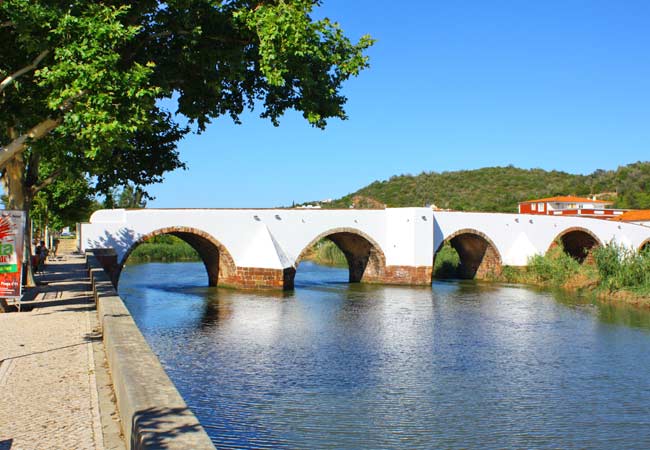
Ponte Romana (3): The name implies the bridge is from the Roman era, but was actually constructed in 1445 to replace the original Roman bridge. Flowing below is the Rio Arade, which despite being 13km from the coast is still tidal at this point. In the Moorish era the river was wider and deeper, allowing Silves to be an inland port, with heavy trade ships sailing directly up from the Atlantic to the city gates.
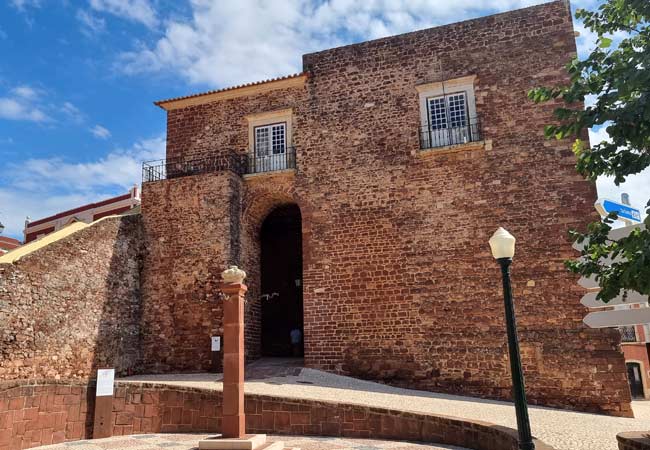
Portas da Cidade (6): The only surviving gateway into the medieval walled city. The entrance is narrow and immediately turns left, a design intended to prevent a large-scale attack or a cavalry charge.
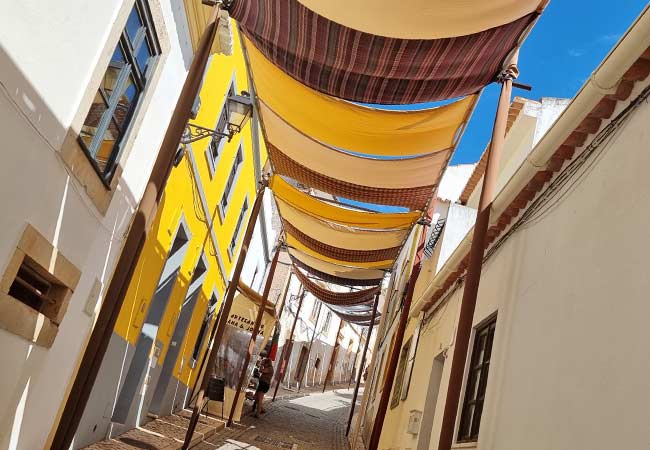
The Rua da Sé: The main street connecting the Portas da Cidade to the cathedral and castle. This is a very steep climb and will sap your energy during the heat of midday.
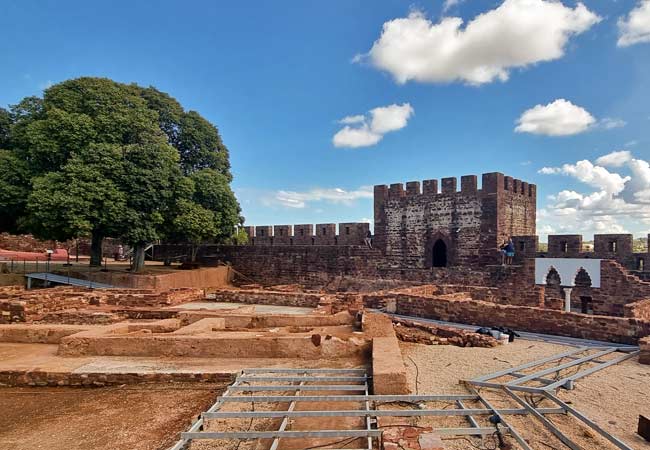
Palácio das Varandas: These excavated ruins within the castle complex represent Portugal's only uncovered Islamic palace. Once home to the "Poet-King" Al-Mu'tamid, they reveal advanced plumbing and a massive subterranean cistern built to withstand year-long medieval sieges.
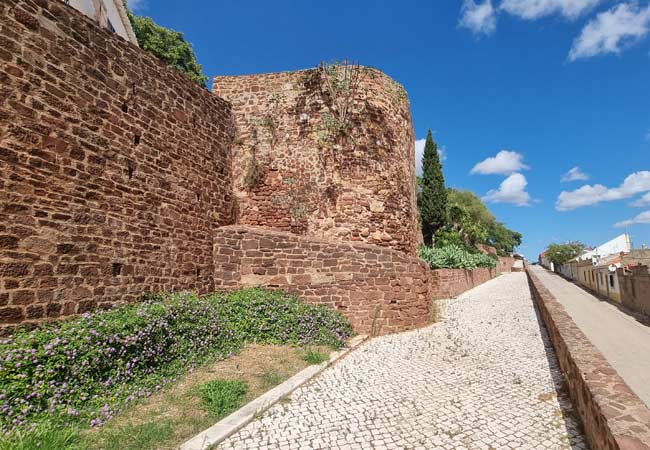
Eastern Town Walls (12): Stretching east from Largo do Município, these battlements were once part of a defensive ring that encircled the medieval city. The walls are constructed from the distinctive "arenito" red sandstone, and this area of Silves offers a peaceful escape from the main tourist trail.
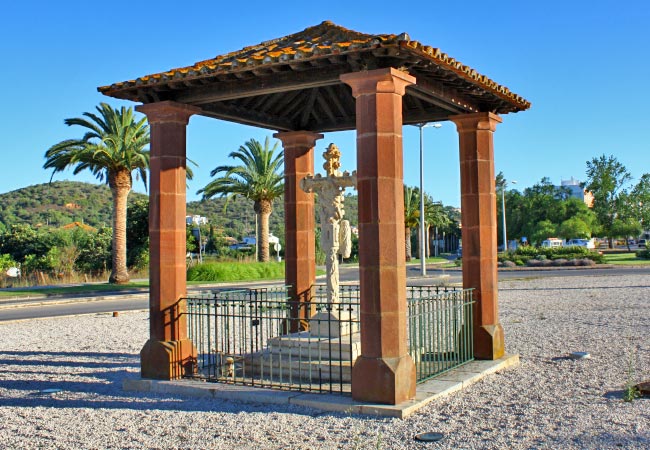
Cruz de Portugal (13): Often overlooked because it is outside the historic centre, this is one of the finest examples of Manueline (Portuguese Late Gothic) art in the country. Carved from white limestone in the 15th century, this three-metre-high cross features two distinct sides: one depicting the Crucifixion of Christ and the other a Pietà (the Virgin Mary holding Christ).
A small group tour of Silves?
If you are limited for time and do not want the hassle of public transport, an organised tour can be a great way to see many different sights in a single day. Along with providing knowledgeable guides, they are also a great way to meet fellow travellers. We have worked with GetYourGuide.com for the past seven years, and some of their best tours that visit Silves are:
Travel to Silves
Public transport within the central Algarve is very limited and infrequent, but it is possible to travel to Silves from all of the main tourist towns of the surrounding region such as Albufeira, Lagos, Lagoa and Portimão.
By car
The easiest method to travel to Silves is by car. There is a large car park to the southwest of the town and from here it is a short walk to the historic centre. Avoid trying to park in the historic centre itself, as the streets are narrow and there is almost no parking available.
By Bus
There are two useful routes to Silves:
• Route 17 - Albufeira to Silves
• Route 113 - Portimão to Silves
Both bus services are operated by Vamus and full timetables can be seen on its website: vamusalgarve.pt. As departures are infrequent, always plan your day around the departure times from Silves, as it can be a long wait for the next service.
By train
Silves is on the regional railway that extends across the entire Algarve, and is useful for travel from Lagos, Portimão and Faro. Fares are inexpensive and there are many departures during the day.
The issue with the train is that the station is 1.8km to the south of the town and feels like it is in a separate village. This walk from the station to Silves is along busy roads with almost no footpaths and is not a pleasant walk. Train services are provided by Comboios de Portugal, and departures and fares can be seen on their website - www.cp.pt/
By Uber or Bolt
For my last few trips to Silves I have taken an Uber, and this was invaluable when travelling with my brother and his young family. It provided a door-to-door service, removed the hassle of public transport, and when the children were tired from the heat we had the flexibility to head straight back to our accommodation. Both Uber and Bolt work well across the Algarve, but there can be waits for drivers at peak times. Fares vary depending on distance and demand, but as a guide our fare was €23 each way for the 30km/30-minute journey from Albufeira.
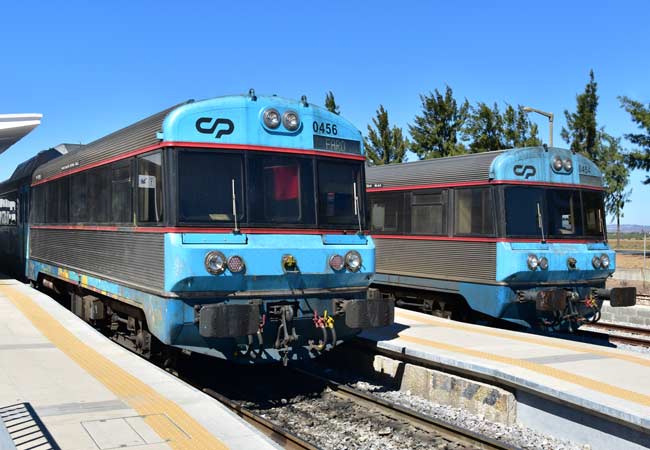
The Algarve regional railway in the central Algarve follows a bizarre route and doesn't connect to any of the major towns.
Where to eat in Silves
Silves has many restaurants that cater to locals rather than tourists, meaning food is much better value than in the coastal towns. The pedestrian streets of Rua Cruz de Portugal and Rua Elias Garcia offer many popular restaurants. When choosing somewhere to eat, always go by the rule that if it is busy and full of Portuguese locals, the food will be good quality and inexpensive. I've listed a few of my favourites below, but there are many more throughout the town:
• Churrasqueira Valdemar: Inexpensive grilled food next to the market. There is no menu, the staff simply ask "chicken or sardines?" and "piri-piri?" Say yes to both. You can't go wrong with half a BBQ chicken, chips, drink, dessert and coffee for around €10.
• Marisqueira Rui: The best seafood restaurant in Silves and a local landmark since 1977. It is loud and bustling, and I suggest ordering the arroz de marisco or the cataplana.
• Restaurante O Pina: A family-run restaurant with three generations in the kitchen. There is often no set menu, you simply eat whatever was cooked that morning. The portions are generous and it is cash only.
• Café Inglês: A popular spot with a shaded terrace just below the castle walls. The food is more international than traditional Portuguese, and it is a great place for a long, relaxed lunch after exploring the castle.
• Parsley & Thyme: An exceptional vegetarian restaurant worth visiting even if you are not a vegetarian.
• Restaurante Ponte Romana: A traditional Portuguese restaurant in a historic building close to the medieval bridge. The locals come for the chanfana (goat stew) and the bacalhau, and the atmosphere feels properly old-world Portuguese.
A holiday to Silves
The majority of visitors to Silves are day-trippers, and very few consider staying the night. This is a shame, as the town offers a peaceful setting, numerous restaurants, and a true Portuguese experience that is increasingly difficult to find elsewhere in the Algarve.
If you are touring the Algarve, do consider Silves instead of the hectic resort towns along the coastline. Silves offers excellent value for money, with all restaurants and cafes priced for locals and not over-inflated for tourists.
Accommodation in Silves and the surrounding area tends to be much cheaper, and this is largely because the town is 12km from the coastline. For a holiday in Silves, a car is recommended as public transport to the beaches and surrounding villages is limited.
The map below shows the best accommodation and rental rooms in Silves. If you adjust the dates to your trip, it will display current prices and availability.
The history of Silves
Silves was founded by the Romans, but it flourished under the North African Moors. The zenith of this era was in 1054 when Al-Mu'tamid ruled over the entire Algarve and parts of southern Spain.
During the 12th century, Silves was the focus of continued fighting, as the newly established Catholic Portugal tried to drive the Muslim Moors from the Algarve.
The castle was the focus of numerous battles; it was sacked by King Leon in 1160, besieged by King Sancho I in 1189 and then recaptured by a powerful Moorish army led by Amir al-Mu'minin in 1191. The final defeat of the Moors was in 1243, but this ultimately led to the demise of Silves, as trade routes to North Africa were severed.
In 1755 the town was badly damaged by a massive earthquake, which destroyed much of the castle and cathedral. The earthquake also caused huge landslides that altered the flow of the Arade River and prevented it from being a navigable port. Since then, Silves has remained a quiet town and a centre for agriculture.
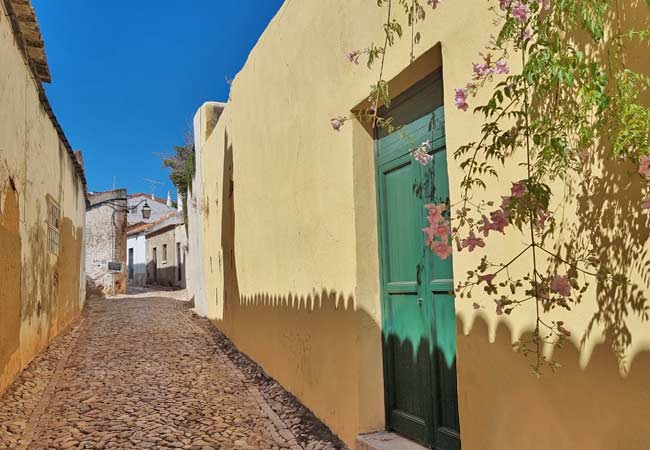
The cobbled backstreets of Silves
Silves Castle
The highlight of any visit to Silves is the imposing castle that dominates the skyline. The castle dates from the 7th century, but the red sandstone brick battlements seen today originate from the 12th century, at the height of the fighting between the Christian Crusaders and the African Moors.
This constant fighting led to the construction of the castle's massive fortifications and ingenious methods to survive an extended siege. These features included a rain-fed cistern, which was so effective it was used by the town up until the 1930s.
Within the castle, there have been extensive archaeological excavations, and from the battlements there are views over the town, the cathedral and the surrounding countryside. At the entrance to the castle is a statue of King Sancho I, who led the first significant victory by the Portuguese in the Algarve by storming the castle in 1189.
Insight: You may wonder how the castle is in such good condition. This is due to a major "restoration" project in the 1940s, which rebuilt most of the towers and battlements.
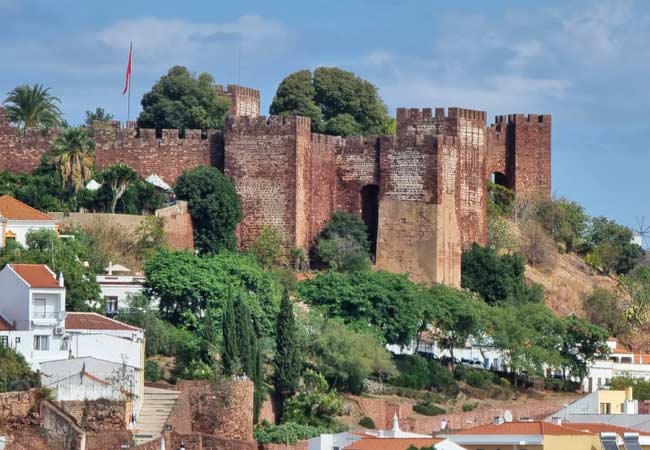
The Castelo de Silves sits on the highest point of the town
Silves or Loulé?
Silves and Loulé are both popular day trips for visitors who are based along the Algarve coastline. Both are historic towns and provide a chance to experience typical Portuguese daily life, but they are very different and will appeal to different types of visitors.
Loulé is much larger, being a bustling city, with a lively daily market and more shops. Silves has more character and charm, with an extensive history and impressive tourist attractions. In my opinion, Silves is the better destination for a day trip.
Our most popular guides to Silves and the Algarve


About the author: I'm Philip Giddings and have been writing these independent guides since 2009. I first visited the Algarve in 2001 when my Portuguese wife, Carla, was proud to show her country to me. We now live in Lisbon but I'm in the region most weeks researching and updating this site or visiting Carla’s extended family who live here. Having both Portuguese-family and friends who live within the Algarve gives me the local insight and personal connection to the region.
I love the Algarve region and strive to ensure every practical detail (such as ticket prices, opening hours) is correct, by checking against official sources and confirming in person on the many trips I make. I am experienced in Portuguese travel having written almost 2,000 guides for my wider set of Portugal Guides, and this is my full-time work and passion. The site is funded by affiliate commissions on tour and accommodation bookings, disclosed on every page that carries them. No tourist board, tour operator or attraction pays to appear here. My full story can be read here.