Algarve-Tourist.com
The best independent guide to the Algarve
Algarve-Tourist.com
The best independent guide to the Algarve
When to Visit Alvor: weather guide and best month to visit
Alvor is a delightful fishing town and one of the most peaceful holiday destinations in the western Algarve. It has a character quite different from the bigger resorts, with a pretty historic centre of narrow cobbled streets, a long boardwalk across the estuary, and one of the finest beaches in the region stretching out towards the headland.
The region enjoys a classic Mediterranean climate, featuring hot, dry summers and mild winters. The weather is reliably fine for heading to the beach from mid-April through to mid-October. The peak months are July and August, when the town fills up, the beach gets busy, and you will need to book ahead to get a table at the best restaurants along the harbourfront.
For most visitors, the best months to visit Alvor are June and September. My favourite is June, and this is when I took my sister and her young family. The weather is still fantastic for the beach, everything is fully open, and the town has a relaxed but lively feel without the intensity of peak summer. Alvor never gets as hectic as Albufeira or Lagos, but there is a noticeable difference in pace outside of July and August.
Spring and autumn are particularly well suited for activity-based holidays. The boardwalk across the Ria de Alvor estuary is a lovely walk at any time of year, and the milder temperatures make it a great base for exploring the surrounding coastline and inland villages.
Winter months (November through March) bring cooler conditions and occasional rainfall. Alvor goes quiet in the low season, but enough restaurants, bars and shops stay open to make it a viable destination for a winter break. It is a smaller town than Lagos or Albufeira, so if you want more going on during the winter months, one of those may suit you better.
For over 25 years, my Portuguese wife and I have been spending time in the Algarve. I've experienced Alvor from the peak of summer, struggling to get a table at A Ribeira, to being the only person on the Praia de Alvor on a blustery January day. This guide will help you identify the ideal time for your visit, and what to expect from each season.
Related articles: Introduction to Alvor - Sights of Alvor
The weather of Alvor
Alvor benefits from the Algarve's renowned Mediterranean climate, with reliably hot summers and mild, pleasant winters. The region boasts over 300 days of sunshine annually, and Alvor's position on the sheltered Ria de Alvor estuary gives it a particularly calm and settled feel compared to the more exposed stretches of the western coastline.
Summers are hot and dry, with July and August seeing average high temperatures of 29°C (84°F) to 33°C (91°F). Official statistics never really tell the true story of what it feels like, as they measure air temperature in the shade. Walking down to the Praia de Alvor in the midday August sun, it will feel significantly hotter than 29°C. During these peak months, rainfall is virtually non-existent and visitors can expect around 12 hours of sunshine daily.
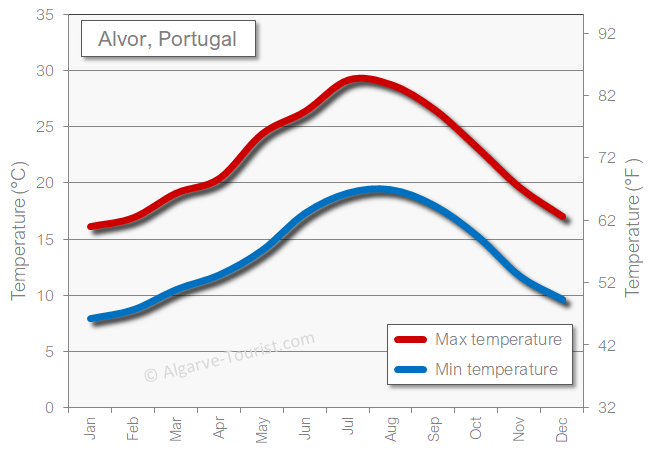
The daytime maximum temperature (measured in the shade) and night-time minimum
The Atlantic sea breeze provides welcome relief during summer heat waves, and evenings are rarely muggy. That said, once night sets in and the wind drops, the humidity can make it feel like the temperature has risen. In the summer you will want air conditioning, though I do not have it in my flat and it is manageable.
Spring (March to May) brings increasingly pleasant conditions, with temperatures climbing from 18°C (64°F) in March to around 25°C (77°F) by late May. Early spring may see occasional rainfall, but by May the weather dries out and beach days become regular. Autumn (September to November) remains pleasantly warm, with temperatures easing from 27°C (81°F) in September to around 18°C (64°F) by late November. Both shoulder seasons experience some rainfall, though it typically arrives in short, heavy bursts rather than prolonged wet spells.
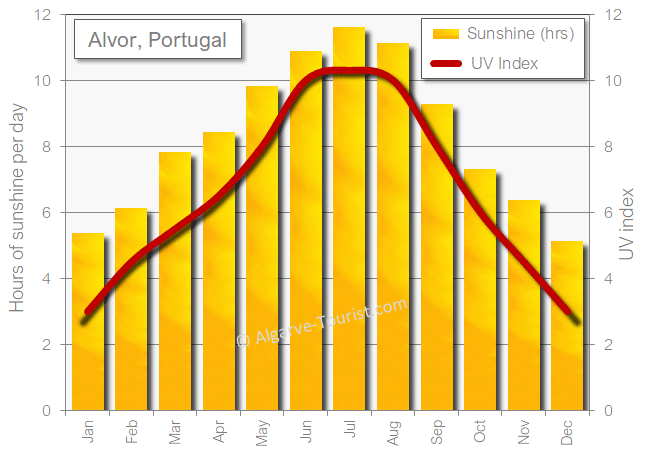
The average hours of sunshine per day and UV intensity
Winter in Alvor (December to February) is mild compared to northern Europe, with daytime temperatures typically between 15°C (59°F) and 17°C (63°F) and cooler nights dropping to 8°C (46°F) to 10°C (50°F). December and January are the wettest months, with occasional heavy showers interspersed with bright, sunny periods. The winter climate remains notably drier and milder than central and northern Portugal, making Alvor an attractive option for those seeking winter sun.
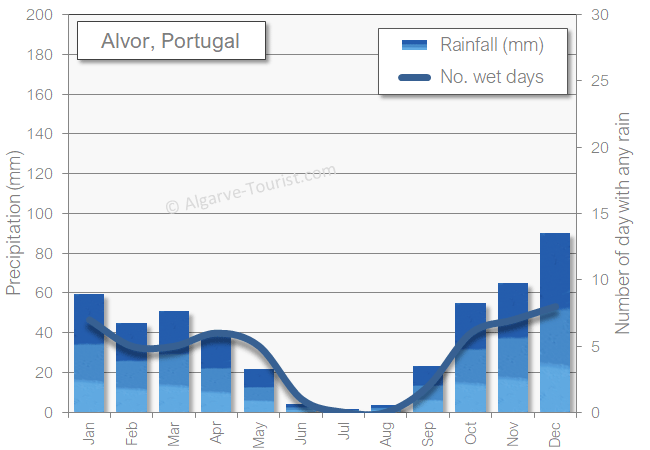
The monthly rainfall and number of wet days
How many beach days per month?
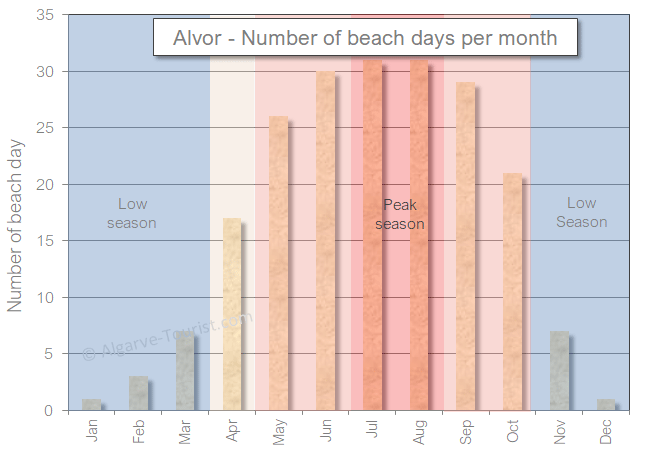
Before planning your holiday to Alvor, it's helpful to understand how beach-friendly the climate is throughout the year. Not every sunny day is a beach day. I class a "beach day" as one with at least three consecutive hours of full sunshine (minimal cloud cover) and temperatures exceeding 22°C (73°F).
Summer provides the most reliable beach weather, with nearly every day in July and August suitable for visiting the beach. In contrast, the winter months of December through February rarely qualify as beach days, with temperatures typically remaining below the 22°C threshold even on sunny days.
The following chart shows the average number of beach days for each month in Alvor.
Have You Booked Your Accommodation?
Alvor is a smaller town, and accommodation options are more limited as a result. The best places fill up quickly for the summer months, so I would always recommend booking as early as possible to avoid disappointment.
The map below displays hotels and accommodation in Alvor. Adjust the dates to your holiday to see current prices and availability.
Sea Temperatures in Alvor
Alvor's beaches face the Atlantic Ocean, not the Mediterranean, and the North Atlantic Current that sweeps along Portugal's coastline keeps the water noticeably chillier than many visitors expect.
Winter months (December through March) see the coldest waters, typically 14°C (57°F). Having tried to swim on a sunny March day let me tell you that the sea water feels really cold. Spring brings gradual warming, with May averaging around 17°C (63°F).
By late August and early September, sea temperatures reach a more comfortable 21°C (70°F), but even at the peak of summer the water will still feel surprisingly cold when the air temperature is above 30°C (86°F). The long, open stretch of Praia de Alvor catches the Atlantic currents directly, so do not expect the sheltered warmth of a Mediterranean cove.

What to expect from each season
The tourist seasons in Alvor are divided into four distinct periods, each offering a different experience for visitors to this charming coastal town.
Peak Season (July-August): Alvor is at its busiest, though "busy" here is relative. It never reaches the intensity of Albufeira or Lagos, and the Praia de Alvor is so vast that you can always find space even on the most crowded days. The harbourfront restaurants are packed most evenings, and you will need to book ahead for popular spots like A Ribeira.
Alvor is an excellent choice for a family summer holiday. The atmosphere is lively and social but never chaotic, and the town has a safe, relaxed feel that suits families with young children. That does mean if you are a couple without children, be prepared for the town to be very family-oriented during these months.
The weather is consistently hot and sunny, and honestly the heat limits what you will want to do. Peak summer is for lounging on the beach, settling into a beach bar, or spending the afternoon by the pool. If you are planning boat tours, book them in advance, and expect long queues at nearby waterparks and theme parks, both for tickets and for the rides themselves.
High Season (June and September): These are my recommended months. The weather is still excellent for the beach, the sea has warmed up, and Alvor has a lovely relaxed feel without the peak summer crowds. If you can travel outside school holidays, this is the sweet spot. Everything is open, the restaurants are busy but not fully booked, and you can still get a good spot on the Praia de Alvor without arriving at 9am.
Shoulder Season (April, May and October): The cooler temperatures make these months ideal for walking the boardwalk across the Ria de Alvor, exploring the surrounding coastline, or playing golf. Beach days are still possible, particularly in May and early October, though you might get the odd shower. Accommodation prices drop noticeably, and the town has a quieter, more local feel.
Low Season (November-March): Alvor goes properly quiet. Some restaurants and bars close for the winter or reduce their hours, and the town feels very different from its summer self. That said, there is still enough open to make it work as a winter base, and the mild climate means you can get out walking on most days. If you want more choice of restaurants and nightlife during the low season, Lagos is a short drive away. Accommodation prices are at their lowest, and this period suits long-stay visitors or anyone who prefers peace and quiet over atmosphere.
Alvor in the Peak Season (July-August)
The peak season in Alvor transforms this coastal town into a vibrant holiday hub. Accommodation throughout the town operates at full capacity, making advance bookings essential, ideally several months ahead for the best options and rates.
This period is ideal if you're bound by school holiday schedules or fixed workplace summer closures, though travellers with more flexible timing might consider the advantages of visiting either side of the summer (May/June or September/October).
During the peak season, you will often have to make reservations for the restaurants and organised activities should be booked at least two days before. Popular options like dolphin-watching cruises and coastal tours frequently sell out days ahead during July and August.
The summer heat in Alvor reaches its peak between 11am and 3pm, when the Mediterranean sun is particularly intense. The UV index regularly reaches extreme levels, necessitating proper sun protection even on cloudy days. Fortunately, Alvor benefits from refreshing evening sea breezes that make outdoor dining and evening strolls particularly pleasant after the day's heat subsides.
For those wishing to explore beyond the beach, scheduling sightseeing and land-based activities for early morning or late afternoon provides a more comfortable experience. The most popular summer activities centre around the water - boat tours to the magnificent Benagil caves, snorkelling expeditions along the dramatic coastline, or kayaking around the pristine Ria de Alvor nature reserve. The sheltered coves around Ponta João de Arens headland offer excellent conditions for paddleboarding and swimming away from the busier main beaches.
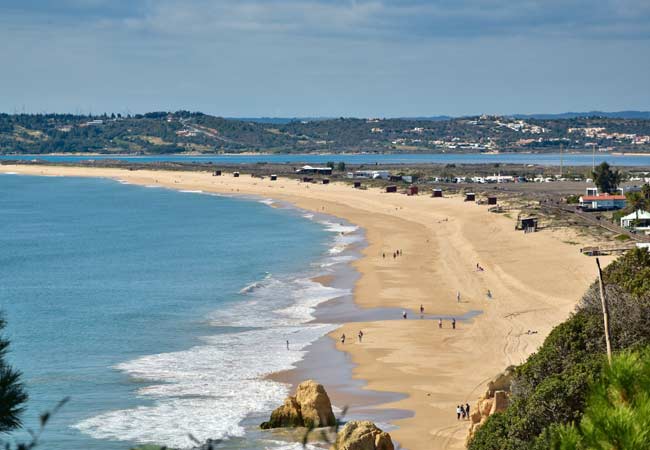
Looking westwards along the main beach of Alvor
Alvor in the High Season (June and September)
June and September represent the sweet spot for visiting Alvor, offering the perfect balance of excellent weather conditions without the drawbacks of peak season. The temperature remains consistently warm enough for full beach enjoyment, with daytime highs typically reaching 26-28°C (79-82°F), ideal for sunbathing and swimming.
The town takes on a noticeably calmer atmosphere during these months, and there is a significant decrease in the number of children in the resorts. Accommodation remains in high demand, but without the premium pricing that characterizes July and August.
These months prove particularly attractive for couples of all ages seeking a more relaxed holiday experience. Restaurants can accommodate diners without lengthy waits, beach space is ample enough to find your ideal spot, and activities can usually be booked with shorter notice. The reduction in family groups means a quieter, more adult-oriented atmosphere prevails throughout the town.
Alvor in the Shoulder Season (April/May and October)
The shoulder season months transform Alvor into a haven for travellers seeking a more authentic Algarve experience. With temperatures typically ranging from 18-24°C (64-75°F), these months provide comfortable conditions that are ideal for exploration and activities without the intense heat of summer.
This period is particularly well-suited for visitors interested in more active pursuits. The cooler weather creates perfect conditions for golf enthusiasts to enjoy the region's world-class courses, while cyclists and hikers can explore the stunning coastal paths and inland trails without overheating.
The calmer pace of life during the shoulder season encourages deeper exploration of the western Algarve. Day trips to historic Silves with its impressive Moorish castle, the charming old town of Lagos, or the bustling commercial centre of Portimão become more enjoyable without summer crowds or parking difficulties.
April merits special consideration, as it can occasionally experience short, intense rainfall. However, these showers typically pass quickly and are followed by fresh, clear conditions. May and October generally offer more stable weather patterns, with October benefiting from sea temperatures that remain warm from the summer months.
The demographic shifts noticeably during these months, with a higher proportion of longer-stay visitors and retirees enjoying extended breaks. This creates a more relaxed atmosphere throughout the town, with a pleasant mix of tourists and locals. Importantly, almost all businesses, restaurants and attractions remain fully operational during these months, providing all the amenities of summer but with easier access and often at lower prices.
Alvor in the Low Season (November to March)
The low season presents a completely different side of Alvor, revealing the town's authentic character when tourism takes a back seat. Though temperatures typically range from 12-18°C (54-64°F), not warm enough for traditional beach activities, the Algarve still enjoys some of the mildest winter conditions in mainland Europe, with frequent sunny days that provide a welcome respite from northern European winters.
Alvor becomes a significantly quieter version of itself during these months, yet remains very much alive. Thanks to its substantial permanent population, many restaurants, cafés and essential shops continue operating year-round, though often with reduced hours.
The demographic shifts dramatically, with retired visitors and long-stay winter residents forming the majority of the tourist population. Many northern Europeans choose to spend extended periods of one to three months here, escaping harsher winters at home while enjoying significantly lower accommodation rates. This creates a small but vibrant international community with a distinctly different atmosphere from the summer months.
Visitors should note that certain seasonal tourist operations, including some boat tours, water sports facilities and summer-oriented businesses, close entirely during this period. Many tourism workers take their own holidays during the quieter months, particularly in January and February.
Our most popular articles for Alvor and the Algarve


About the author: I'm Philip Giddings and have been writing these independent guides since 2009. I first visited the Algarve in 2001 when my Portuguese wife, Carla, was proud to show her country to me. We now live in Lisbon but I'm in the region most weeks researching and updating this site or visiting Carla’s extended family who live here. Having both Portuguese-family and friends who live within the Algarve gives me the local insight and personal connection to the region.
I love the Algarve region and strive to ensure every practical detail (such as ticket prices, opening hours) is correct, by checking against official sources and confirming in person on the many trips I make. I am experienced in Portuguese travel having written almost 2,000 guides for my wider set of Portugal Guides, and this is my full-time work and passion. The site is funded by affiliate commissions on tour and accommodation bookings, disclosed on every page that carries them. No tourist board, tour operator or attraction pays to appear here. My full story can be read here.